
The Panthera 200: Big Adventure in a 20-Foot Footprint
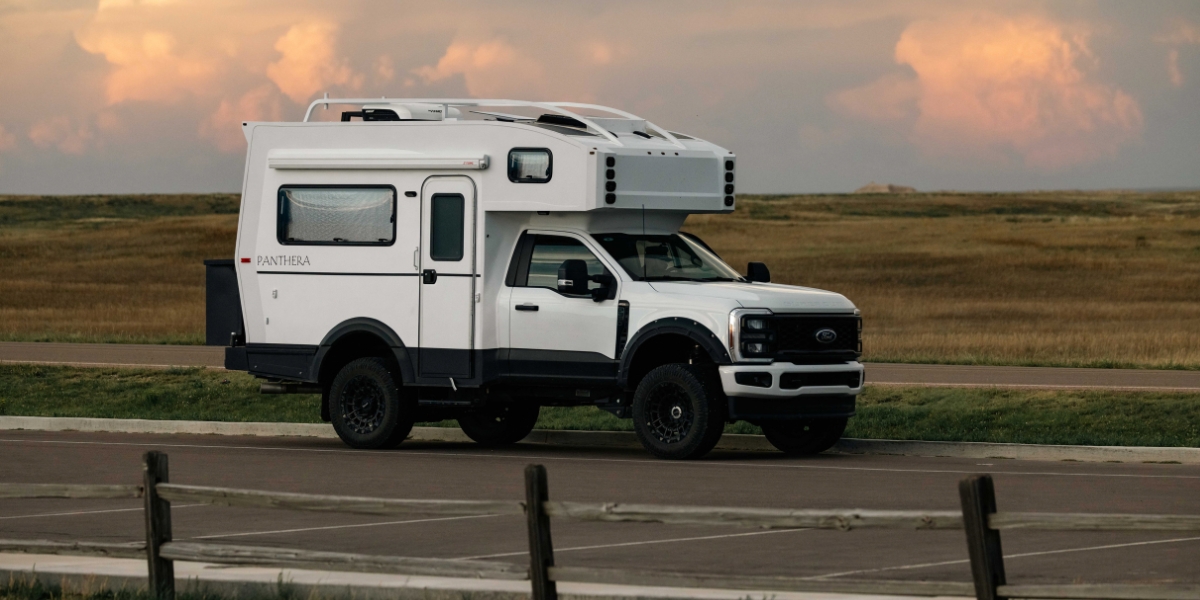
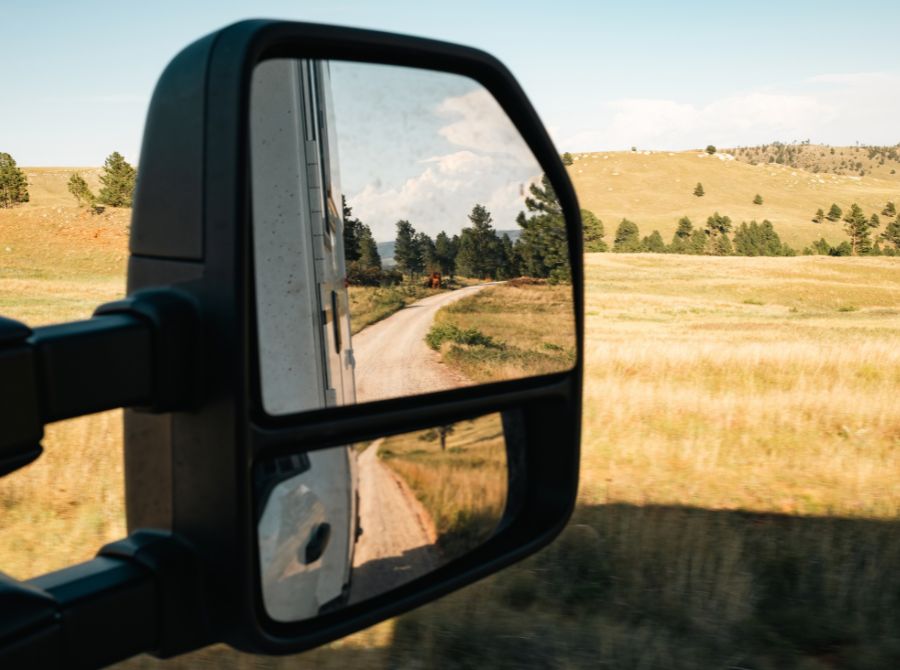
The park road narrows about two miles past the last campground. Pavement turns to gravel, gravel turns to a shelf road cut into the hillside, and somewhere around the third switchback the question changes. It’s no longer “can the truck make it?” It’s “can the truck turn around?”
Anyone who has spent real time overlanding knows that moment. Every feature you add to an expedition vehicle (a bigger galley, a real bathroom, more battery, more water) adds length, width and weight. Eventually the rig built to take you farther becomes the reason you stop short: the trailhead lot you can’t fit into, the campground with a length limit, the scenic drive you skip.
Bigger Isn’t Always Better
That’s the problem the Panthera 200 was designed to solve. It’s the smallest model in Tiger’s Panthera lineup, built to stay compact and agile without giving up the systems you need for extended off-grid travel.
It’s also why Katie and Joe of Katie And Joe On The Go picked a Panthera 200 for the final stretch of their mission to visit all 63 U.S. national parks. The last parks on their list are a real-world test of the idea: tight park roads, crowded trailheads and campgrounds that don’t welcome oversized rigs.
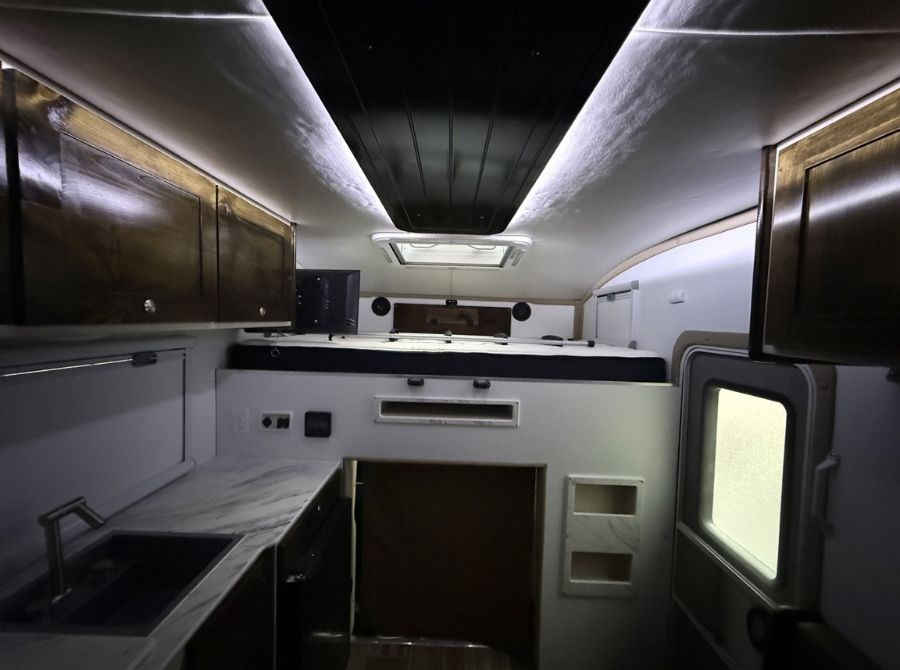
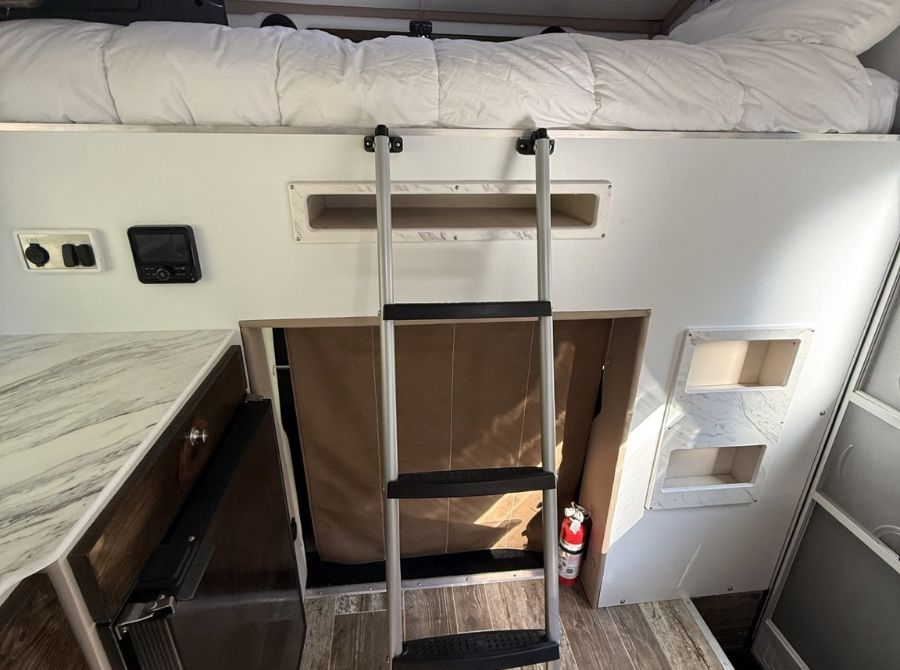
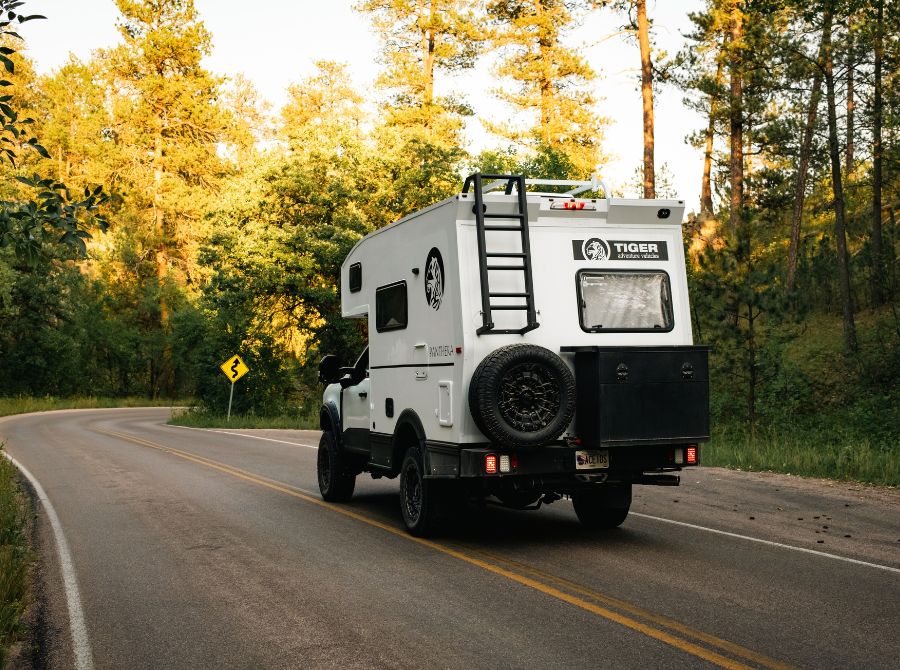
Built Around a Single-Cab F-350
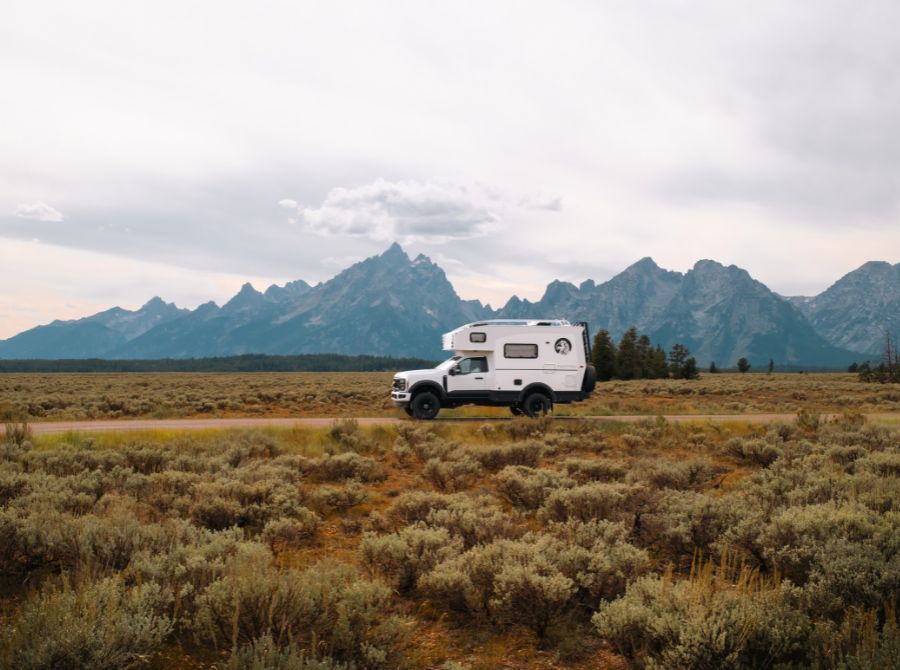
Every decision starts with the chassis. The Panthera 200 is built on a single-cab Ford F-350 with single rear wheels (SRW) and the 7.3L gas V8 (diesel is an option).. The single cab keeps the wheelbase and overall length down, and the SRW setup keeps the vehicle narrower than a dually. In Tiger’s recommended configuration, the finished Panthera 200 measures approx. 20 feet long, about 7 feet wide and roughly 10 feet tall and weighing in around 9,500 pounds.
What You Don’t Give Up
A compact expedition vehicle usually means compromises inside. Walk through the Panthera 200 and you’ll have a hard time finding them.
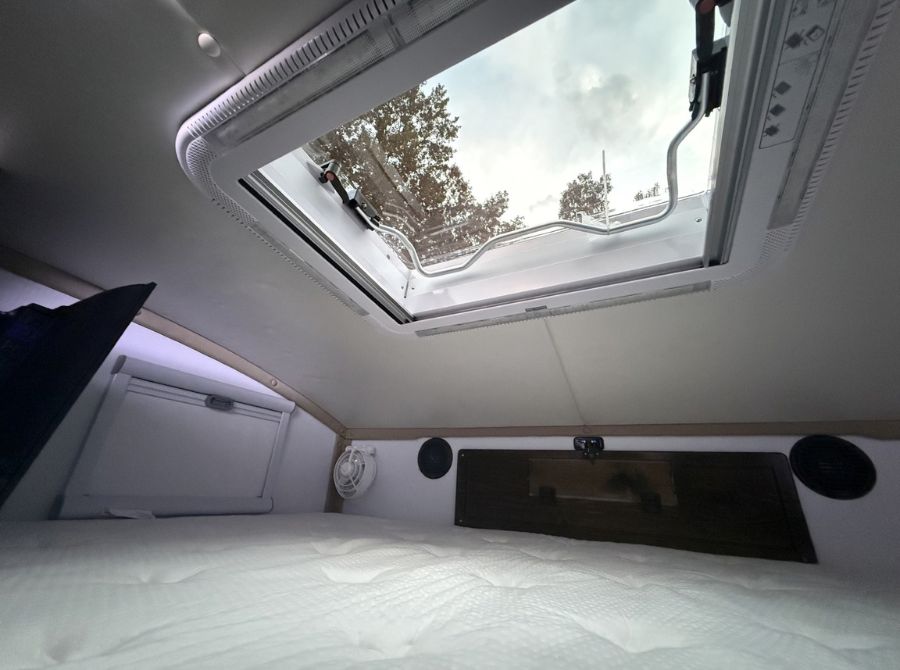
The galley has room to cook real meals, with induction cooking, a refrigerator/freezer and a convection microwave, all set in soft-close cabinetry that stays quiet on washboard roads. A full wet bath means a week off-grid doesn’t mean a week without a shower. A permanent overhead bed stays made, and the couch or dinette converts to a second bed.
Tiger’s signature large pass-through ties it together. With the console removed, you can move between the cab and the living space without stepping outside, which matters when the weather turns.
Capability for the Long Haul
Comfort is only half the story. The Panthera 200 is built to stay out.
Victron electronics manage up to 1,200Ah of lithium capacity, fed by as much as 600 watts of solar. A 50-gallon fresh-water tank stretches time between fill-ups, and air conditioning plus hydronic heat and hot water keep the cabin comfortable from desert heat to high-country frost. Dual-pane windows and spray-foam insulation hold that temperature steady.
Underneath, upgraded suspension and 35″ tires give it the clearance and footing for rough terrain (tire and suspension are optional). A Starlink option keeps you connected when you choose to be (handy when you’re editing the next video from a park boundary), and outdoor hookups make camp setup quick.
Go Farther, Then Stay Awhile
Back to that switchback. In the Panthera 200, it’s just another turn. The road keeps going, the small clearing at the end has room for one vehicle, and yours fits.
That’s the real benefit of a 20-foot footprint. You get into the places where a larger expedition rig becomes cumbersome, and once you arrive, you still have a real home base: a hot meal, a hot shower and a bed that’s already made.
Want to see it on the road? Follow Katie and Joe’s national park journey on YouTube. Then explore the full Panthera 200 specs, floor plan and build options, or compare it with the rest of the Panthera lineup.

